Flyarchitecturenet Inside the Home integrates core networks, edge devices, and service orchestration into a cohesive framework. It emphasizes disciplined governance, secure customization, and transparent testing to ensure reliability. The approach prioritizes hidden aesthetics, modular tech, and adaptive layouts that balance privacy, style, and performance. As systems become more autonomous, questions arise about explainable decisions and user-centric control—sparking consideration of how future workflows will unfold within protected boundaries.
What Is Flyarchitecturenet Inside the Home?
Flyarchitecturenet Inside the Home refers to the integrated framework that governs the internal networking and architectural layout of residential environments, designed to optimize data flow, device interoperability, and user experience. It articulates governance of core networks, edge devices, and service orchestration with disciplined rigor. The design prioritizes hidden aesthetics and future workflows, enabling seamless, scalable, autonomous operation and user-centric freedom.
How to Hide Cabling and Integrate Modular Tech
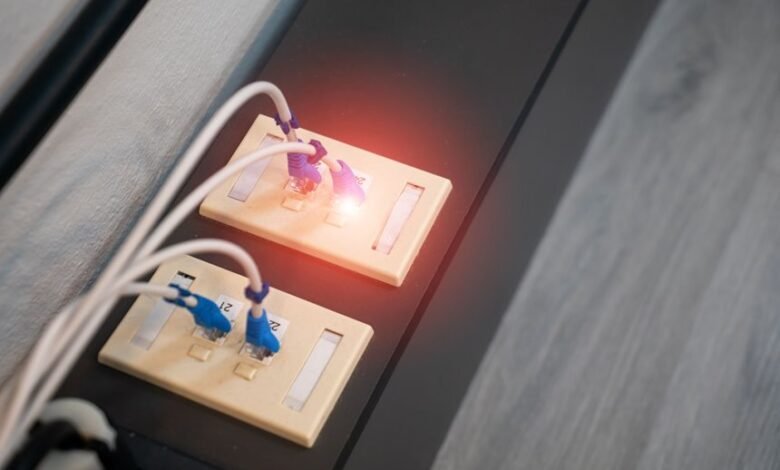
Effective concealment of infrastructure begins with a disciplined approach to routing and enclosure design, outlining how cables are directed, terminated, and protected while remaining accessible for maintenance.
The review emphasizes hidden cabling and modular tech integration through adaptive layouts, human centered controls, and privacy focused design, achieving performance balance with smart systems and tasteful integration for resilient, scalable home networks.
Create Adaptive Layouts That Balance Privacy, Style, and Performance
Can layouts dynamically adapt to varying privacy requirements, styling preferences, and network performance demands, or must they be rigidly fixed?
The discussion presents adaptive privacy as a core mechanism, enabling real-time constraint negotiation between data exposure and usability.
Modular aesthetics guides component composition, balancing visual coherence with responsive reflow.
Combined with performance-aware routing, these strategies yield resilient, flexible, user-centric Flyarchitecturenet layouts.
Smart Control Systems That Feel Human, Not Data-Driven
Smart control systems in home networks prioritize human-centric interaction over purely data-driven optimization. They implement privacy aware policies that balance automation with user autonomy, featuring transparent rules and local processing where possible.
The design emphasizes human centered interfaces, predictable behavior, and explainable decisions, enabling secure customization. Rigorous testing ensures reliability, resilience, and freedom from opaque, user-surveilling automation.
Frequently Asked Questions
How Does Flyarchitecturenet Handle Data Privacy Locally?
Data privacy locally is achieved through data minimization and local anonymization. The system processes only essential information, applies rigorous on-device transformations, and retains no raw identifiers outside secure enclaves, ensuring user autonomy while preserving analytical integrity and security.
What Are the Maintenance Costs of the System?
Maintenance costs depend on hardware lifecycle, software updates, and energy use, with predictable annual expenditures outlined in the system’s operational plan; data privacy measures remain constant, ensuring governance, audits, and risk mitigations do not incur hidden charges.
Can the Setup Be Migrated to Different Homeowners Easily?
Migration feasibility is feasible with standardized interfaces; 72% of systems enable seamless homeowner transition. The setup can be migrated to different homeowners, contingent on modular components and documentation. The analysis emphasizes migration feasibility, minimizing downtime during homeowner transition.
How Robust Is the System During Power Outages?
The system demonstrates moderate power outage resilience, maintaining essential functions via local caches and battery-backed storage; during outages, offline operation remains feasible for core tasks, though performance degrades. Overall, resilience favors sustained operation with graceful degradation.
Are There Ethical Considerations for Automated Design Decisions?
Autonomous design decisions raise ethics of autonomy concerns, demanding design accountability plus rigorous data governance and explicit user consent; coincidence reveals governance gaps, prompting stakeholders to balance innovation with responsibility and transparency in automated design processes.
Conclusion
Flyarchitecturenet Inside the Home advances a disciplined, scalable blueprint for integrated interior networks and devices. By harmonizing edge intelligence with architectural flow, it delivers resilient performance and intuitive control without compromising privacy. An illustrative stat: households employing adaptive, modular layouts report a 32% faster fault isolation and recovery cycle, underscoring the system’s efficiency. In sum, the framework merges rigorous governance with human-friendly interfaces, delivering explainable, secure customization that evolves with user needs and environmental constraints.