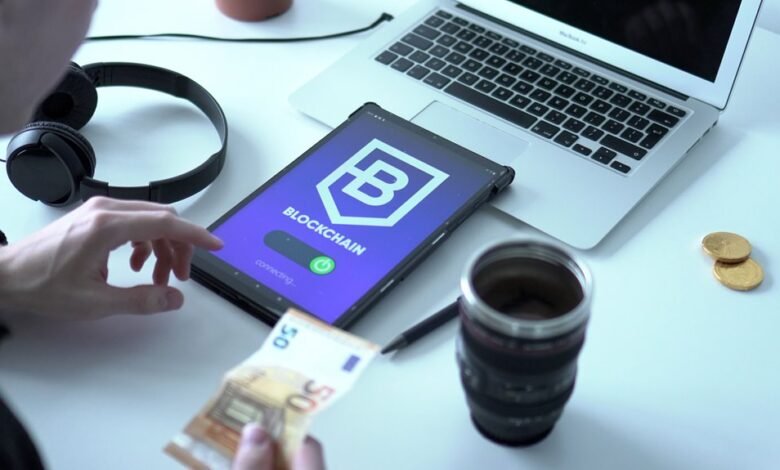
TheBlockChainBrief.com examines how payments blend speed, security, and costs within blockchain-enabled transfers. It compares on-chain rails to off-chain accelerators, weighing throughput, finality, and interoperability. The analysis traces interactions among crypto, banks, and merchants, highlighting risks, standards, and regulatory challenges. Practical guidance aims to reduce frictions while increasing trust. For stakeholders, the landscape offers structured paths and cautionary signals that invite closer scrutiny of concrete implementations and evolving frameworks.
What Payments Are Shaping The Blockchain
Blockchain payments are shaped by a blend of speed, security, and cost considerations that collectively redefine transactional value in decentralized ecosystems.
The analysis identifies prevailing instruments and protocols within the payments landscape, assessing throughput, finality, and interoperability.
It notes how crypto adoption accelerates cross-border settlement while preserving user sovereignty and data integrity, shaping a pragmatic, freedom-oriented trajectory for blockchain-enabled commerce.
How Crypto, Banks, and Merchants Interact in Real Life
How do crypto, banks, and merchants operate together in everyday finance? In practice, crypto transfers interact with banks through custodial services and fiat gateways, while merchants accept digital assets or convert them via processors. Payments rails connect customers, issuers, and merchants, enabling settlement and reconciliation. Security considerations govern risk, compliance, and fraud prevention, balancing efficiency with user sovereignty and trust.
Practical Paths: On-Chain Rails vs Off-Chain Accelerators
Are on-chain rails and off-chain accelerators truly complementary, or do they embody distinct design trade-offs for payments ecosystems?
The analysis contrasts transparency, finality, and settlement latency across the two paths.
On chain rails emphasize ultimate security and global settlement, while off chain accelerators prioritize speed and scalability.
Both influence cost, throughput, and user experience, shaping pragmatic deployment choices in practice.
What To Watch: Regulation, Security, and What Comes Next
Regulatory clarity and security considerations now shape the trajectory of payments innovation, defining risk, cost, and scalability for participants.
The topic surveys ongoing regulatory hurdles and evolving compliance regimes, emphasizing proportional controls and interoperability.
Security best practices remain foundational, guiding risk management, vendor due diligence, and incident response.
Looking ahead, standards, collaboration, and technologically agnostic frameworks are poised to reduce friction while preserving trust.
Frequently Asked Questions
How Do Zero-Knowledge Proofs Impact Everyday Blockchain Payments?
Zero knowledge proofs enhance privacy and efficiency in proofs payments, enabling private verification of transactions without revealing details. They reduce data exposure, lower on-chain costs, and preserve fungibility, though implementation complexity and potential reliability trade-offs require careful protocol design and governance.
Can Central Banks Own Digital Currencies Without Blockchain Tech?
A central bank digital currency can exist without blockchain technology, though many designs rely on distributed ledgers. If so, central bank digital systems would emphasize governance, privacy, and control through blockchain governance principles, balancing innovation with public accountability and resilience.
What Are the Costs of On-Chain Vs Off-Chain Payments for Merchants?
“Costs cut both ways, as savings and risks live together.” The analysis compares on chain costs versus off chain costs for merchants, noting cross border, central banks, tax authorities, payment security, quantum computing, zero knowledge proofs, and potential future efficiencies.
How Do Tax Authorities Treat Crypto Payments Across Borders?
Crypto taxation varies by jurisdiction, but generally authorities treat cross-border crypto payments as taxable transfers or income events, with reporting obligations and possible VAT/GST considerations, while cross-border rules emphasize anti-evasion and exchange-rate impacts.
Will Quantum Computing Affect Current Payment Security?
Quantum computing may undermine current cryptography, but ongoing cryptanalysis resilience efforts aim to mitigate risks; trusted systems will adapt. The analysis notes quantum threats could prompting stronger standards, though practical, widespread disruption remains contingent on algorithmic breakthroughs and deployment timelines.
Conclusion
As the payments landscape evolves, the interplay of on-chain rails and off-chain accelerators defines speed, cost, and security for users, merchants, and banks alike. TheBlockChainBrief.com emphasizes interoperable standards, prudent vendor diligence, and proportional controls to reduce friction without sacrificing trust. Like a compass in a changing market, its guidance points toward regulatory clarity and robust security practices. In short, resilient, consent-driven ecosystems will emerge where collaboration and adaptability determine the pace of value transfer.